MEGAN BARTON ARCHITECT


MEGAN BARTON ARCHITECT
I am a young architect and designer graduated at the School of Architecture, Design and Urbanism at the University of Buenos Aires (FADU-UBA), Argentina.
Being a descendant of various generations of migrants of Irish, English, Spanish, Belgian, Australian and Kiwi origin in South America explains the fact that English is my mother tongue, and that I have been raised bilingual.
Born in a family of sailors, I have sailed my entire life and have a strong attraction to the water and everything around it. I have lived in and among boats all my life, and given my interest in both the design of spaces and on-board living, it is easy to see why, during my last few professional years, I have focused in the yacht design industry.
I have had specialized studies on sustainable building design and the recycling work of heritage buildings, as well as project realization and execution, which I believe have helped me greatly whilst working as project manager, being simultaneously in charge of multiple projects which ranged from private luxury villas and apartments, to over 90m private yachts.
I consider myself a fast and easy learner, with enthusiasm and a strong will to learn and continue adapting to my surroundings.
In my last work position as a Project Manager in Dölker + Voges, my responsibilities varied from fabric and material selection and sample ordering, to document approval, to face-to-face meetings with clients, among others. I have always been recognized for my proactive attitude and good presence and relationship with
high-end clients.
I am currently self-employed, focusing on interior projects for private clients, while planning and pursuing my personal illustration projects.
PORTFOLIO
CATHEDRAL OF BOOKS / CATEDRAL DE LIBROS
Designed in 2015 in Architectural Design Course III dictated by architects Álvaro Arrese and Alberto Álvarez. As my personal goal, the Library played the role of linking the city to the park and the Rio de la Plata, as well as functioning as a fully silent library with a separate speaking room. A four storey-high hall pictured it as a “Cathedral of Books”.
 |  |  |
|---|---|---|
 |  |  |
 |
CIVITAS-FORUM
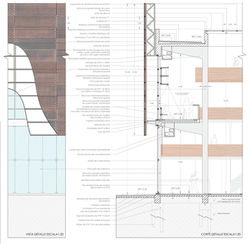
Set in the Villa 31 in Buenos Aires, a new district being re-urbanized and set in value, the complexity of the project was to find a use that would liven and better the quality of life in this area of the city. This is why I developed a Live-Work-Play building, with museum, exposition, living and working areas. The dual problematic being juggled were public/private, rigid/flexible, present/future, natural/man-made, as the place itself held these dualities. The main material being brick, greatly used in Argentine architecture for its noble properties, the project was sensitive to the place in which it was placed.
 |  |  |
|---|---|---|
 |  |  |
 |  |  |
 |  |  |
 |  |  |
 |  |
OLIVOS FILM SCHOOL / UNIVERSIDAD DEL CINE
Designed in 2014 in Architectural Design Course II dictated by architect Eduardo Scagliotti. Placed in an English Railroad district, brick is an important aesthetic of this area, and based on work by O’Donnell & Tuomey, these were the results. The combination of glass, solid brick and intermittent brick layout allowed for the creation of different ambiances for various uses in a building meant for cinematic learning.
 |  |  |
|---|---|---|
 |  |  |
OLYMPIC VILLA HOUSING COMPLEX / COMPLEJO DE VIVIENDAS EN VILLA OLÍMPICA
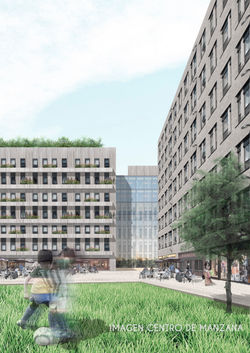
Working for a private client, I had the chance to design the concept and spaces in a complete square in the City of Buenos Aires, along with a series of graphic images.
 |  |  |
|---|---|---|
 |  |  |
 |  |  |
DUCK REST / PATONARIO
Network Virtual Class - Arquisur (Taller Virtual en Red) dictated by architect Fernando Speranza gave us the chance to connect with architecture students from Latin America to design an architectural object, (in our case a resting place for ducks in the park by the Planet and Space Observatory in Buenos Aires), but mostly it was an opportunity to interact and understand what kind of architecture and spaces are being worked on in other countries. It was a very interesting and enriching experience from the first moment we conceived an object, all through the interaction and communication, to the final online presentation.
 |  |
|---|
JUNGLE OF GAMES / SELVA DE JUEGO
In this case, also during Network Virtual Class - Arquisur (Taller Virtual en Red) dictated by architect Fernando Speranza, we were given a fan-like object with which we designed a playground area located on campus for the preschool children to have a chance to play, as well as livening up the surroundings visually.
 |  |  |
|---|
URBAN INTERVENTION IN SAN MARTIN / INTERVENCIÓN URBANA EN SAN MARTÍN
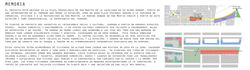
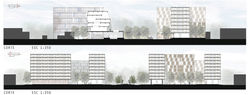
Designed in 2016, during Architectural Design Course IV dictated by architect and urbanist Polo Jaimes, this urban intervention in railroad lands in San Martín gave me the first insight to what urban planning is. We have worked on the urban spaces, the display of different kinds of roads, trees and building types, so as to design the ideal living, working and travelling routes in this particular place.
 |  |  |
|---|---|---|
 |  |  |
 |  |  |
URBAN PLAN FOR SAN MARTIN / PLAN URBANO PARA SAN MARTÍN
Project developed in 2016, during Urban Planning Course dictated by architect and urbanist Alfredo Garay. The plan was in an area near UNSAM, a university renowned for its research in new technologies and innovation. This is why this urban plan was so complex, integrating the pulsating energy of the university campus with the existing industrial area of warehouses and heavy transit. The plan included new heavy transit routes, pedestrian-only streets, bicycle roads and an important investment in public space in general, including lighting, sidewalks and zoning modifications that allow new uses for the new designed area.
 |  |  |
|---|
URBAN IN-FILL IN MICROCENTRO PORTEÑO / INFILL URBANO EN MICROCENTRO PORTEÑO
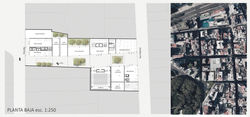
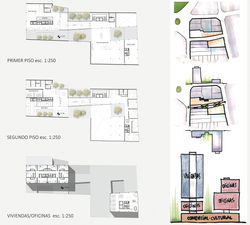
This project was developed in 2016 during Architectural Design Course IV dictated by architect and urbanist Polo Jaimes. Being a tight-packed, high density, mixed use area, it has a great amount of banks, financial offices, restaurants, architectural studios, mixed with residential buildings, hotels, schools, shops and touristic spots, as well as many other uses, all coexisting in a very particular micro-ambiance. This lot had an added particularity: it crossed the dense square and connected a pedestrian-only street with a low speed, secondary vehicular street. In this complex frame, we designed a mixed use, high rise building that presented places for culture, shop, parking, work, rest and living, and a new, pedestrian walkway connecting two different urban situations, dealing with the complexities presented in this dense part of the city.
 |  |  |
|---|---|---|
 |  |  |
URBAN PLAN FOR GREATER BUENOS AIRES / PLAN URBANO PARA GBA SUR
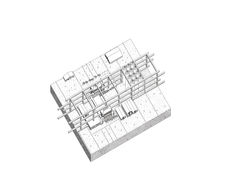
A new kind of project, it was developed in 2017 during Urban Design Course dictated by architects and urbanologists in RED Team. In a group of nine students, we were given guidelines and a trigger theme to develop the plan for a certain section of Greater Buenos Aires. The theme was Politics, and we were to develop a city that reflects politics from its conception. Different “layers” brought different inputs to the building of the theoretical city. The exercise became a space to think and plan how to make this the best city in terms of transport, points of interest, density and political power. The presentation was a published book, which was mostly a manifest and a rule-book for this futuristic ideal city.
 |  |  |
|---|---|---|
 |  |  |
 |  |  |
 |  |  |
 |  |  |
 |  |  |
 |  |
SMART VEGETATION BUS STATION IN SAN ANTONIO DE ARECO / TERMINAL SUSTENTABLE EN ARECO
Sustainable Architecture Course dictated by architect Adriana Miceli in 2017. Each group was assigned a specific sustainability topic to investigate and use this information to design the best fit building for a Bus Station. We worked with vegetation and the way plants can provide thermal insulation to keep the temperature steady through extreme weather conditions that occur in San Antonio the Areco, as well as sound insulation to protect the waiting room from the audio and dust pollution originated by the highway that surrounds the building. It was very interesting to internalize and truly comprehend the great value that vegetation has for buildings, without having to use expensive technology to make a building sustainable.
 |  |  |
|---|---|---|
 |  |  |
DIAGNOSIS OF THE STATE OF MODERN ARCHITECTURE MOVEMENT BUILDINGS / DIAGNÓSTICO DE EDIFICIOS DEL MOV. MODERNO
The diagnosis and understanding of the decay of heritage buildings was the main focus of the Recycling and Preservation of Heritage Buildings Course dictated by architects Mabel Scarone and Jorge Gazaneo. We were given the chance to explore the “Casa Columba” by architect Antonio Vilar, and draw our own conclusions regarding the state and decay of the building. We developed a mapping of the different pathologies the building suffered and their level of reversibility. With this information, and considering the effects of removing and/or fixing the pathologies, we proposed an intervention and a new use to revalue the building, its architecture and the movement it represents.
 |  |  |
|---|---|---|
 |  |  |
 |  |  |
 |  |  |
 |
RECYCLING AND RE-PURPOSING PROJECT FOR A HERITAGE BUILDING / PRESERVACIÓN Y RECICLAJE DE EDIFICIO DE PATRIMONIO HISTÓRICO
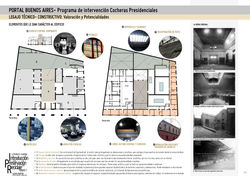
Although Buenos Aires is only 200 years old, we consider buildings from the end of the nineteenth and beginning of the twentieth centuries to be of the highest level of heritage. This is why we took this object of study, the original Presidential Parking Building circa 1890s, to diagnose, map, and thoroughly study the state and the possibilities this building offered for a new use. This was a very complex work, given that the building was not considered of value for many years, and because of its heavy work use, it has undergone multiple modifications, most of which did not take into consideration the harm inflicted on the original structure. It was also very difficult to obtain blueprints of the original and multiple subsequent modifications, but after months of work, we were able to understand the subtleties the building had and its true character. With this information and after thorough thinking, we designed a communications portal for news and media. The process provided very interesting insight on the responsibility one assumes when modifying a heritage building.
 |  |  |
|---|---|---|
 |  |  |
 |  |  |
 |  |  |
 |  |
BUENOS AIRES MUSEUM OF MODERN ART / MUSEO DE ARTE MODERNO DE BUENOS AIRES
 |  |  |
|---|---|---|
 |
MULTIMEDIA CENTER IN SAN ISIDRO / CENTRO MULTIMEDIA EN SAN ISIDRO
 |  |  |
|---|---|---|
 |  |  |
 |  |